Loading...
Serving Port St. Lucie, FL and surrounding areas. (772) 251-0040
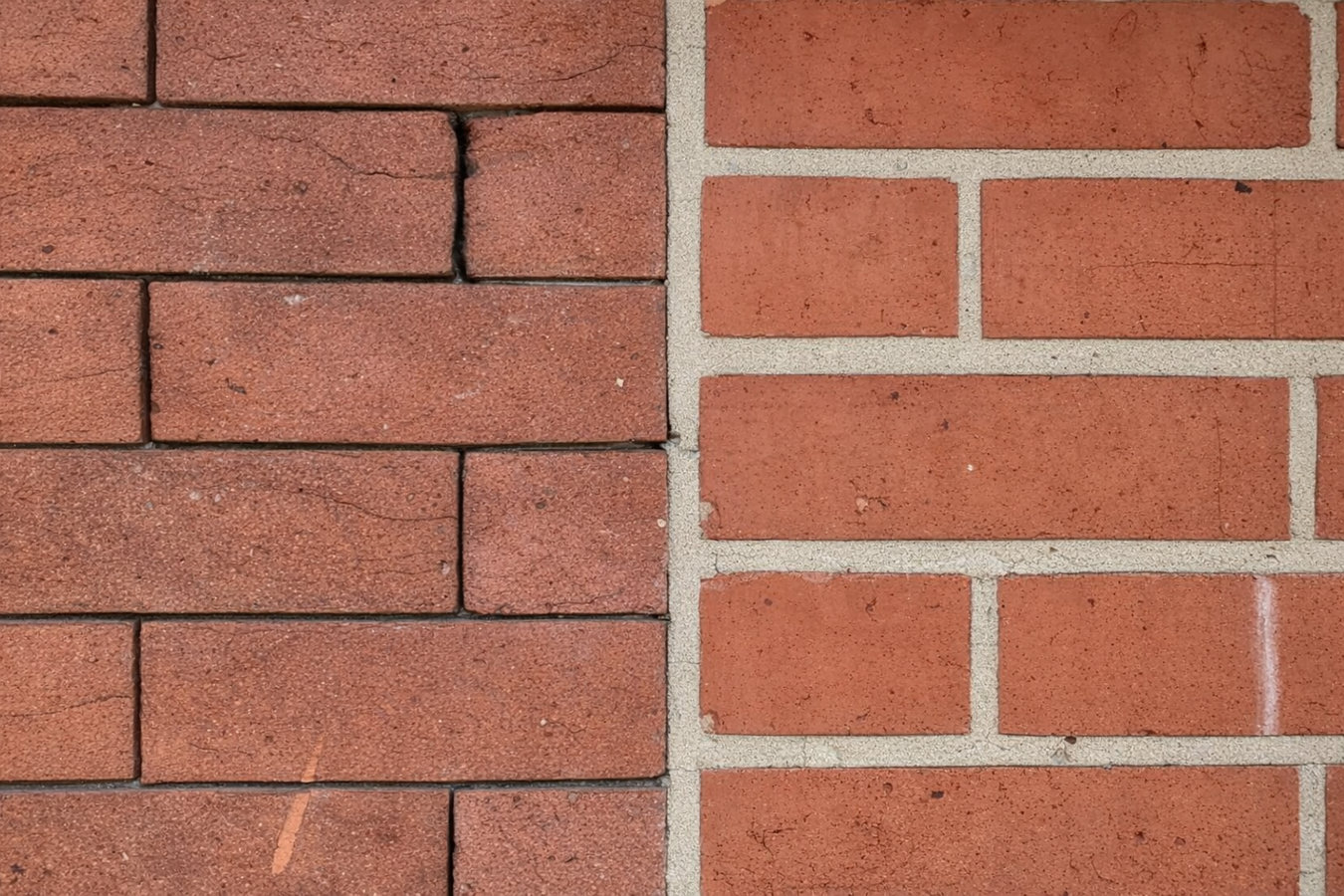
Crumbling mortar joints let water into your walls during South Florida storms - brick pointing closes those gaps with fresh mortar matched to your brick before the next hurricane season arrives.
Brick pointing in Port St. Lucie means removing old, failing mortar from between the bricks to a depth of at least three-quarters of an inch and packing in fresh mortar matched to your specific brick - most residential pointing jobs on a standard wall or chimney take one to three days from start to finish.
Mortar is softer than brick by design - it absorbs movement and moisture so the bricks do not crack. But over time, Port St. Lucie's heat, humidity, and annual storm cycles wear it down until it crumbles, shrinks, or pulls away from the brick face. Once that seal breaks, water finds its way in behind the brick. Catching the problem at the mortar stage costs a fraction of what full wall repair or interior water damage remediation runs. Many homes in Port St. Lucie were built in the 1980s and 1990s and have never had a pointing job done - those mortar joints are often showing wear even when the damage is not obvious from the street.
If the mortar damage is visible across multiple surfaces - or if your home has not had any masonry attention in years - a broader foundation repair or general masonry check may be worth doing at the same time. For walls where the joint pattern itself needs to be restored, our tuckpointing service uses a two-color method that brings older brick work back to a clean, precise finish.
Run your finger along the mortar joints - if material crumbles off easily or you can see dark gaps between bricks, the mortar has broken down past the point of waiting. Even small gaps are enough for water to get in during a heavy Florida rainstorm, and once water is behind the brick, the damage spreads quickly to the wall structure underneath.
White marks on brick are called efflorescence - they appear when water moves through the wall, picks up salts from the mortar or block behind it, and deposits them on the surface as it evaporates. In Port St. Lucie's humid climate, this is a reliable early warning that water is finding its way through failing joints. It does not mean the wall is ruined, but it does mean the mortar needs attention soon.
Chimneys take the hardest weather beating of any brick surface on your home. After a hurricane season in Port St. Lucie, look at the mortar joints around the chimney cap and along the sides. If the joints look pitted, recessed, or rough compared to the brick face, the mortar has eroded and needs to be replaced before the next season.
If a wall backing up to an exterior brick surface feels damp, shows water staining, or has paint that bubbles or peels, water is likely getting in through the mortar joints outside. This is especially common on east- and southeast-facing walls in Port St. Lucie, which take the most wind-driven rain during tropical weather events.
We repoint mortar joints on freestanding brick walls, home exteriors, chimney stacks, retaining features, and brick veneer on the sides of CBS homes throughout Port St. Lucie. The process starts by grinding or chiseling out the old mortar to a proper depth - surface skimming is one of the most common reasons repointing jobs fail within a season or two. We then hand-pack fresh mortar and shape the joints to match the existing profile, whether that is a weathered, concave, or flush finish.
For older brick surfaces where the joint profile has been lost entirely, our tuckpointing service restores a clean, defined joint line using two contrasting mortar colors - a technique that makes aged brick work look significantly better while also sealing it. If the project involves bricks that are cracked or spalling in addition to failing mortar, our foundation repair assessment can confirm whether the problem is limited to the surface or is structural.
For freestanding or boundary walls where mortar joints have crumbled, cracked, or pulled away from the brick face over years of Florida heat and rain.
Suited to chimneys where storm season has eroded the mortar joints around the cap and along the stack - typically quoted as a flat project price due to access.
For brick veneer on CBS home exteriors, particularly on east- and southeast-facing walls that take the most wind-driven rain during tropical weather.
Best for older brick work where the joint profile needs to be fully restored with a two-color mortar finish that improves both the seal and the appearance.
Port St. Lucie's subtropical climate puts more stress on mortar joints than most other parts of the country. Temperatures stay above 90 degrees for months at a time, humidity is high year-round, and the city sits in a region that sees regular tropical storm activity from June through November. That cycle of heat expansion, moisture, and wind-driven rain wears down mortar joints faster than in cooler, drier climates. Many of the homes built during Port St. Lucie's 1980s and 1990s building boom are now 25 to 40 years old - old enough that mortar in Florida's climate is typically past its useful life and overdue for inspection even if the joints look okay from the street. Salt-laden air drifting inland from the Atlantic coast adds additional wear to mortar on the windward side of homes, particularly those close to the St. Lucie River.
The practical urgency is hurricane season. Open mortar joints are one of the more common ways water gets into a home during a tropical storm - not through windows or doors, but straight through the wall. We work with homeowners across the Treasure Coast, including in Vero Beach and Stuart, where the same coastal exposure and storm season risk apply. Scheduling pointing work in late winter or early spring - February through April - gives fresh mortar the best chance to cure fully before the first summer storms arrive.
We respond within one business day. A quick call or form submission is all it takes - describe what you are seeing and we will ask a few questions about the age of your home and which surfaces are affected.
We visit your home to inspect the brick and mortar up close - checking how deep the damage goes, whether the bricks themselves need attention, and what mortar type was originally used. This is also when we spot anything that might affect scope, like scaffolding for a tall wall.
You receive a written quote specifying how much mortar will be removed, what mix will be used, and how many days the work will take. Once you approve, the crew removes old mortar with grinders and chisels and hand-packs new mortar to match the existing joint profile.
Fresh mortar needs 24 to 48 hours before it can get wet and up to a week to reach full strength. We walk you through the finished work before leaving - showing you what was done and what to avoid during the curing period, like pressure washing or applying sealant.
Free written estimate. No obligation. We reply within one business day.
(772) 251-0040Using a mix that is harder than your bricks can crack them over time - and replacing bricks costs far more than repointing ever did. We assess your existing mortar and bricks before mixing anything, so the repair does not create a bigger problem five years from now.
Port St. Lucie homeowners in our 12-community service area know that wind-driven rain during a tropical storm does not give you a second chance. We book pointing work in late winter and early spring so your joints are sealed and cured before June.
Homes near the St. Lucie River or the coast take a harder beating from salt-laden air than most homeowners realize. We account for that when choosing materials and shaping joints - a slightly recessed profile sheds water better in high-humidity conditions than a flat one.
Florida requires masonry contractors doing structural work to hold a state license. You can verify our license in minutes on the DBPR website. We carry liability insurance and workers' compensation coverage - protecting you if anything goes wrong on your property.
Brick pointing done right in Port St. Lucie comes down to two things: removing enough old mortar and using the right replacement mix for the specific brick and climate. You can verify contractor license status through the Florida DBPR license lookup, and the National Park Service Preservation Briefs set the national standard for repointing best practices that experienced masons follow.
When water gets through failing mortar joints for long enough, it can eventually reach the foundation - catch it early with a professional assessment.
Learn moreA more detailed form of mortar joint repair that uses two contrasting colors to restore the appearance of precision-cut joints on older brick work.
Learn morePort St. Lucie masons book up fast in the dry season - reach out now and we will get your estimate scheduled before the best spring slots are gone.